Research Article | | Peer-Reviewed

Extension Programmes and Rural Livelihoods Under Climate Change: Evidence from Rice and Cassava Farmers in South East Nigeria

Received: 18 November 2025     Accepted: 6 December 2025     Published: 29 December 2025
Views:       Downloads:
Abstract

This study effectively assesses climate change, extension, and rural livelihoods in South East Nigeria. Its clear objectives, specifically examined the socioeconomic characteristics of rice and cassava respondents involved in IFAD-assisted VCDP, identified the livelihoods available to the respondents, examined the adaptive strategies available to cushion the effect of climate change, and determined the constraints to rice and cassava production in the areas. An appropriate multistage sampling design, combining purposive and random sampling techniques, was used to select 300 rice and cassava farmers. Data were collected using a well-structured questionnaire and Focus Group Discussions (FGDs). Analysis combines descriptive statistics, coding, thematic interpretation, and an inferential t-test. The study revealed that female respondents (54.7%) dominated the area, with an average age of approximately 41 years; the majority (50.3%) were single, the majority (51.7%) had a formal education, and the mean farming experience was 10 years. The mean contact with extension agents per annum was approximately 8 times; a greater proportion (24.7%) were producers & marketers. The mean rice production was 9.94 tonnes, and the mean cassava production was 41.44 tonnes of cassava. The majority (53.7%) agree that their primary livelihood is rice and cassava processing. The adaptation strategies to climate change were: the use of improved rice & cassava varieties, the timing of planting, and rice bunding. The main constraints were the high cost of labour, the high cost of transportation, and bad roads. The study demonstrates that participation in an extension programme significantly improved the livelihoods of rice and cassava farmers in South East Nigeria. It is recommended that policy interventions prioritize reducing labour and transportation costs, improving rural road infrastructure, strengthening input supply systems, reforming land tenure to enhance access, expanding affordable credit facilities, and addressing insecurity to foster resilience and sustainable agricultural development.

Published in International Journal of Applied Agricultural Sciences (Volume 11, Issue 6)
DOI 10.11648/j.ijaas.20251106.12
Page(s) 217-231
Creative Commons

This is an Open Access article, distributed under the terms of the Creative Commons Attribution 4.0 International License (http://creativecommons.org/licenses/by/4.0/), which permits unrestricted use, distribution and reproduction in any medium or format, provided the original work is properly cited.

Copyright

Copyright © The Author(s), 2025. Published by Science Publishing Group

Keywords

Climate Change, Rural Livelihood, Extension Programmes, Rice, Cassava, Farmers, South East, Nigeria

1. Introduction
Rural communities are facing many dilemmas as the impacts of climate change become more evident . In various rural areas worldwide, households rely heavily on agriculture and livestock for their livelihoods and food security . Unfortunately, each of these livelihoods is highly vulnerable to the impacts of climate change, including rising temperatures and increased incidence of extreme weather events . Developing climate change adaptation practices to mitigate climate risks has recently become increasingly important in rural development initiatives . In the context of these rural development efforts, strengthening climate-smart agricultural practices is undoubtedly an indispensable aspect amid the ever-changing impacts of climate change .
Rural development projects require effective extension programmes to promote sustainable development in the agricultural sector despite the challenges posed by climate change. Extension programmes, such as the International Fund for Agricultural Development (IFAD)- assisted Value Chain Development Programme (VCDP), aim to provide farmers with the knowledge and skills they need to improve their farming practices for food security and livelihoods . Through rural development programmes, extension agents advise on adopting innovative cropping practices that adapt farming communities to unusual weather patterns and climate change . The effectiveness of climate change adaptation efforts through extension programmes has been demonstrated among rural farmers in many countries worldwide .
One of the rural development projects the government has employed to mitigate the adverse effects of climate change and maintain food security amongst the rural populace in Nigeria is the IFAD-assisted VCDP. The Value Chain Development Programmes train farmers to mitigate their challenges by developing appropriate and usable business plans, improving financial management and record-keeping systems, and adopting best agronomic practices for cassava and rice sustainability and improved yield production . The programme actively engages field extension agents to teach rural cassava and rice farmers numerous Good Agronomic Practices (GAPs) for cassava and rice production, thereby increasing yields, improving their standard of living, and enhancing their livelihoods.
Development experts have emphasized the importance of agricultural extension programmes in disseminating knowledge, promoting economic growth, and alleviating poverty . Thus, in the context of climate change, IFAD-assisted VCDP has played an essential role in promoting sustainable development in rural areas.
Despite the Nigerian government's agricultural programmes to curb the adverse effects of climate change, improve rural farmers' livelihoods, and enhance food security, farmers in remote areas still live in poverty. This oversight limits our understanding of the comprehensive efforts of such programmes in diverse agricultural domains. Our study seeks to address this research gap by exploring the unique dynamics and potential benefits of extension programmes in the context of climate change and rural livelihoods amongst small-scale cassava and rice farmers in Nigeria.
Okorie et al studied the societal awareness of the causes and effects of Climate Change (CC) in Southeast Nigeria, without discussing crop production. This study does not have the temerity to address food security and rural livelihoods in the regions.
In their study analysis of the effect of climate change on cassava production in Anambra East Local Government Area of Anambra State, Nigeria, they purposively studied a part of Anambra State, Nigeria, creating a gap in the State and other Southeast regions regarding other crops like rice .
In their study, Climate Change and Rural Livelihoods: The Potential of Extension Programmes for Sustainable Development, discussed agricultural extension programmes and farmers' awareness of climate change in Pakistan, limiting it to an increase in farmers' understanding of land use and climate risks, and adoption of adaptation practices for sustainable livelihoods, without exposing the effect of climate change on specific crops .
Previous studies have noted that Southeast Nigeria needs recent empirical evidence on the effects of climate change on rural livelihoods. This academic article aims to provide new empirical evidence and contribute to the existing literature on extension programmes by closely examining the socioeconomic characteristics of rice and cassava respondents involved in IFAD-assisted VCDP, identifying the livelihoods available to the respondents engaged in IFAD-assisted VCDP, studying the adaptive strategies available to cushion the effect of climate change in the regions, and determining the constraints to rice and cassava production in the areas.
The research hypothesis of this study is that Extension programmes have no significant influence on rural farmers’ livelihood.
2. The Study Area
The study was conducted in Anambra, Ebonyi, and Enugu States of Nigeria, in the context of the IFAD-assisted VCDP agricultural extension programme. Anambra State comprises twenty-one (21) Local Government Areas (LGAs), 177 autonomous communities, and four (4) Agricultural Zones, namely: Aguata, Anambra, Awka, and Onitsha . Ebonyi State has thirteen (13) Local Government Areas (LGAs), namely: Abakaliki, Afikpo North, Afikpo South, Ebonyi, Ezza North, Ezza South, Ikwo, Ishielu, Ivo, Izzi, Ohaukwu, Ohaozara, and Onicha. The State comprises three (3) agricultural zones, namely: Ebonyi North, Ebonyi Central, and Ebonyi South . Enugu State is made up of seventeen (17) LGAs. Enugu State is divided into three agricultural zones: Enugu North, Enugu West, and Enugu East .
3. Methodology
A multistage sampling procedure involving purposive and simple random sampling techniques was used to select 300 rice and cassava farmers. Table 1 below shows the stages of sample size selection. Stage I involved the purposive selection of Anambra, Ebonyi, and Enugu States as case studies because of the presence of IFAD VCDP, which is primarily oriented towards addressing climate change, enhancing sustainable rural livelihoods, and promoting rice and cassava production in Nigeria. Stage II entailed the purposive selection of one Local Government Area (LGA)-namely, Orumba North, Onicha, and Isi-Uzo-from each of the selected States, based on their designation as agricultural zones. Stage III involved a simple random selection of one (1) community or town from each of the selected LGAs. Stage IV involved a simple random selection of one (1) village from the selected community or town. Stage V involved simple random sampling, in which 50 cassava farmers and 50 rice farmers were selected from each of the chosen villages. This procedure yielded a stratified sample of 100 rice and cassava farmers per village, culminating in a total sample frame of 300 respondents for the study.
Table 1. Distribution of sample size according to Communities.

States

LGA

Communities/towns Villages

Sampled stratum

Anambra

Orumba North

Ndikelionwu Ndikpa

100

Ebonyi

Onicha

Shiri district Isieke

100

Enugu

Isi-Uzo

Ikem Abbia

100

Source: Research sample frame
LGA: Local Government Area
3.1. Data Collection
A well-structured questionnaire and Focus Group Discussions (FGDs) were used to extract information from the respondents. Four (4) enumerators were adequately trained for the work. The interview schedule was divided into four (4) sections. Section 1 was designed to examine the socioeconomic characteristics of rice and cassava respondents involved in IFAD-assisted VCDP, section 2 was intended to identify the livelihoods available to the respondents engaged in IFAD-assisted VCDP, section 3 was designed to identify the adaptation strategies used by the respondents, and finally, section 4 was intended to identify the constraints militating against rice and cassava production in the regions.
3.2. Data Analysis
Inferential statistical techniques, such as the t-test, and descriptive techniques, such as frequency, percentage, mean, coding, and thematic analyses, were used to analyze the qualitative data. International Business Machines Statistical Package for the Social Sciences (IBM-SPSS) version 23.0 was used for all data analysis. The descriptive statistics used, as adopted from , are given below:
the x¯=FXn
Where
x¯ = mean
X = variable
n = sample size
F= frequency
Test of hypothesis: The t-test statistical technique t = (x̅1-x̅2)/√(s1^2/n1+s2^2/n2) as adopted by was used to test the hypothesis that extension programmes have no significant influence on farmers’ livelihoods (income).
Where
x̅1 = mean income of participants
x̅2 = mean income of non-participants
s1^2 = variance of income for participants
s2^2 = variance of income for non-participants
n1= sample size of participants
n2 = sample size of non-participants
4. Results
4.1. Socioeconomic Characteristics of the Respondents
4.1.1. Sex of the Respondents
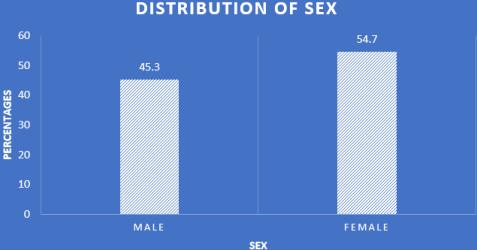
Figure 1 shows that the majority (54.7%) of the respondents were female, while the remaining 45.3% were male.
Figure 1. Sex of the Respondents.
4.1.2. Age of the Respondents
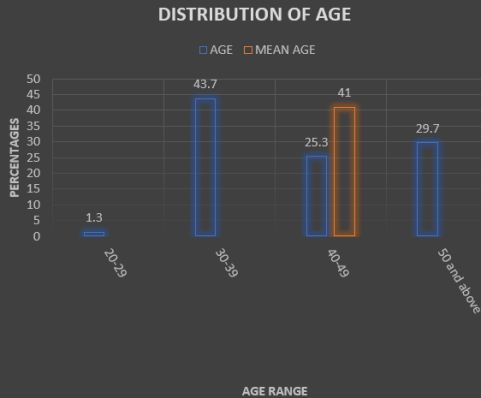
Figure 2 reveals that a greater proportion (43.7%) of respondents fell within the age bracket of 30-39 years, 29.7% were 50 years and above, 25.3% fell within the age bracket of 40-49 years, and the remaining 1.3% fell within the age bracket of 20-29 years. On average, respondents' ages were approximately 41 years.
Figure 2. Age of the Respondents.
4.1.3. Marital Status of the Respondents
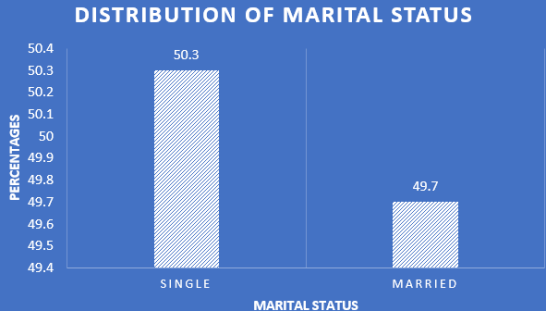
The study discloses that the majority (50.3%) of the respondents were single, while the remaining 49.7% were married (Figure 3).
Figure 3. Marital Status of the Respondents.
4.1.4. Respondents' Level of Education
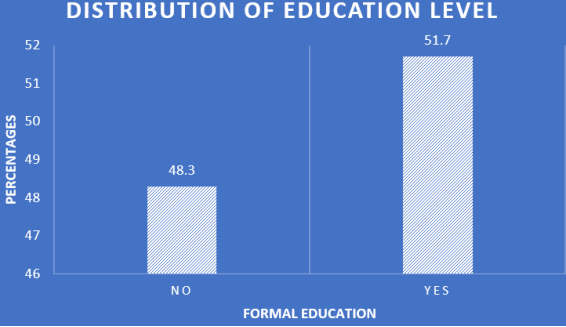
Figure 4 shows that a majority (51.7%) of the respondents had formal education, while the remaining 48.3% had no formal education.
Figure 4. Respondents' Level of Education.
4.1.5. Respondents’ Farming Experience
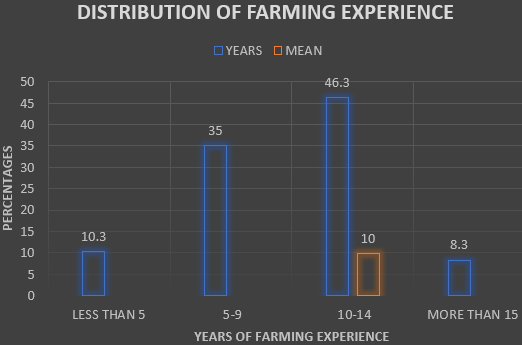
Figure 5 reveals that a greater proportion (46.3%) of respondents had farming experience of 10-14 years, 35.0% of 5-9 years, and 10.3% of less than 5 years. At the same time, the remaining 8.3% had more than 15 years of farming experience. The mean farming experience was on average 10 years.
Figure 5. Respondents’ Farming Experience.
4.1.6. Number of Extension Contacts
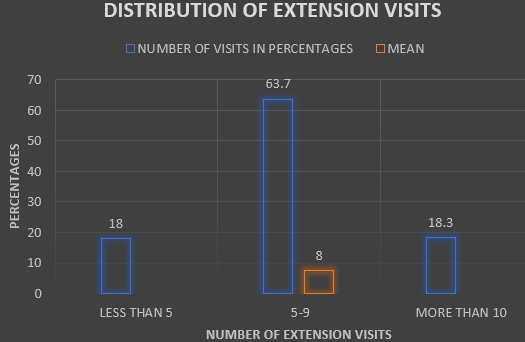
Figure 6 shows that a majority (63.7%) of the respondents had between 5-9 contacts with extension agents per annum. 18.3% of respondents had contact with extension agents more than 10 times per annum, while the remaining 18.0% had fewer than five contacts per annum. The mean number of contacts with extension agents per annum was approximately 8.
Figure 6. Number of Extension Contacts.
4.1.7. Respondents’ Occupation
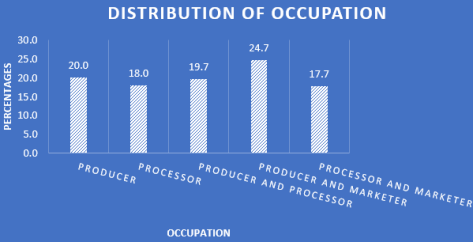
Figure 7 shows that a greater proportion (24.7%) of the respondents were producers & marketers, 20.0% were producers, 19.7% were producers and processors, 18.0% were processors, while the remaining 17.7% were processors and marketers.
Figure 7. Respondents’ Occupation.
4.1.8. Rice Yield
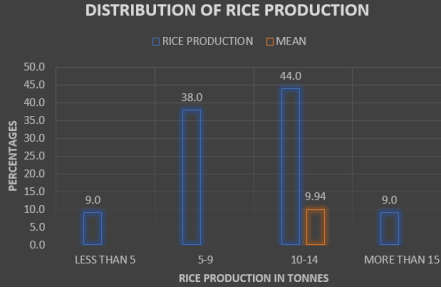
Figure 8 shows that a greater proportion (44.0%) of respondents produced between 10-14 tonnes of rice, 38.0% made between 5-9 tonnes, and 9.0% made less than 5 tonnes and greater than 15 tonnes of rice, respectively. The mean rice production was 9.94 tonnes.
Figure 8. Rice Yield.
4.1.9. Cassava Yield
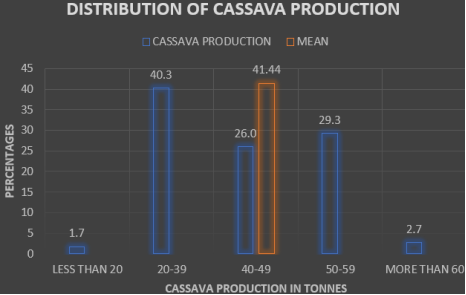
Figure 9 shows that a greater proportion (40.3%) of the respondents produced between 20-39 tonnes of cassava, 29.3% made between 50-59 tonnes, 26.0% produced between 40-49 tonnes, and 2.7% produced above 60 tonnes. The remaining 1.7% produced less than 20 tonnes. The mean cassava production was 41.44 tonnes.
Figure 9. Cassava Yield.
4.2. Respondents’ Livelihoods
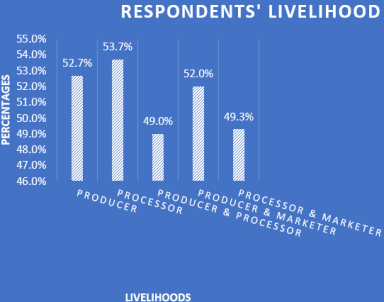
Figure 10 shows that a majority (53.7%) of respondents agree that their primary livelihood is rice and cassava processing; 52.7% are producers; 52.0% are producers & marketers; and 49.3% are processors & marketers. At the same time, the remaining 49.0% are producers and processors.
Figure 10. Respondents’ Livelihoods.
4.3. Respondents’ Adaptation Strategies to Climate Change
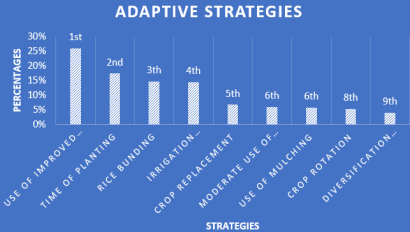
Figure 11 reveals the chronological results for the adaptation strategies to climate change. The use of improved rice & cassava varieties ranked 1st as the primary strategy used by the respondents, followed by planting time and rice bunding, ranking 2nd and 3rd, respectively.
Figure 11. Respondents’ Adaptation Strategies to Climate Change.
4.4. Factors That Constrain the Cultivation of Rice and Cassava
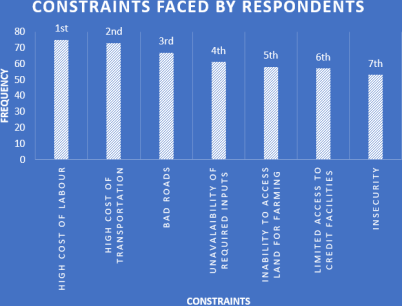
Figure 12 shows the results of the constraints faced by rice and cassava farmers in a chronological order. The main constraints were the high cost of labour, which ranked 1st, followed by the high cost of transportation and bad roads, ranking 2nd and 3rd, respectively. Others include the unavailability of the required inputs, the inability to access land for farming, limited access to credit facilities, and insecurity.
Figure 12. Factors that Constrain the Cultivation of Rice and Cassava.
4.5. Extension Programmes Have No Significant Influence on Rural Farmers’ Livelihood
Table 2 reflects the results of a two-sample t-test statistical technique on climate change and rural livelihoods: the potential of extension programmes for sustainable development: a case study of rice and cassava farmers in South East Nigeria.
Table 2. Extension programmes have no significant influence on rural farmers’ livelihood.

Participants

Non-Participants

Mean

₦7504.67

₦4980.67

Variance

1986353.91

1287341.83

SD

1409.381

1134.611

Observations

150

150

Hypothesized Mean Difference

0

df

285

t Stat

17.085***

P (T<=t) one-tail

0.000

t Critical one-tailed

1.650

P (T<=t) two-tail

0.000

t Critical two-tailed

1.968

Field Survey, 2025. Sig. @ 1% (***)
5. Discussion
5.1. Respondents’ Sex
Female dominance in the study area suggests that women are the primary actors in rice and cassava production. As a result, gender equality shows that empowering women farmers can accelerate progress toward broader development goals. This finding agrees with the study by , which found that the majority (50.1%) of respondents were female, while the remaining 49.9% were male. This study concurs with that rural women were more active in the cassava value chain, particularly in the processing sector (34.4%). Furthermore, this study disagrees with , which found that male actors were more prevalent in the sampled population in their study area. This study also disagrees with , who reported that more men (12%) were involved in IFAD VCDP than women (1.52%). They further noted that women (1.3%) were more prevalent in the processing and marketing chain than men (0%). However, more men (61%) participated in production compared to women (23%).
5.1.2. Respondents’ Age
The study found that the respondents are at a productive age, enabling them to be actively involved in rice and cassava farming. The predominance of respondents in the productive age bracket indicates a strong, active labour force for rice and cassava farming. This enhances the potential to adopt improved technologies, sustain agricultural productivity, and strengthen rural livelihoods, while also positioning this demographic as critical agents in climate change adaptation and sustainable development initiatives. These findings are in line with the study by , which found that most rural farmers were young people because of the vigor required for agricultural work. They went further to note that young people get involved in farming activities as a means of livelihood.
5.1.3. Marital Status of the Respondents
This result indicates that single farmers accounted for the majority of respondents in the study area. The predominance of single farmers among respondents suggests a demographic structure characterized by autonomy in farm decision-making. Furthermore, being single often means greater independence in farm management decisions, without the need to negotiate with spouses or extended family. Also, single farmers may have more flexibility in how they allocate income, possibly reinvesting more into farming. This study agrees with the study of , who noted that a majority (88.5%) of the respondents were single.
5.1.4. Respondents' Level of Education
The findings revealed that education plays a vital role in agricultural growth and improves the standard of living of respondents. The level of education could determine the opportunities available to enhance food security and reduce poverty in the rural community. The predominance of respondents with formal education suggests greater potential to adopt improved agricultural practices, effective farm management, and responsiveness to extension services. This enhances productivity and resilience, while also positioning farmers to better access institutional support and contribute to sustainable rural development. This finding aligns with , who stated that education opens the farmer's mind to knowledge of Good Agronomic Practices (GAP), encourages the adoption of new inputs, and also encourages the embrace of extension services.
5.1.5. Respondents’ Farming Experience
The study found that respondents had adequate farming experience, an essential factor in agricultural engagement. The predominance of respondents with adequate farming experience implies a strong foundation of practical knowledge and skills that enhance productivity, resilience, and livelihood sustainability. This finding underscores the importance of leveraging experienced farmers in extension programmes and policy interventions, as they serve as key actors in promoting climate-smart practices and sustainable rural development. This result is in line with the earlier findings of , who found that 55.3% of respondents have more than 10 years of experience.
5.1.6. Number of Extension Contacts
Based on the findings, the respondent's contact with extension agents was sufficient and played a significant role in sustainable development. The sufficiency of farmers’ contact with extension agents implies effective knowledge transfer and adoption of improved practices, which significantly enhanced productivity and livelihoods. This finding highlights the pivotal role of extension services as strategic instruments for climate change adaptation and sustainable rural development in South East Nigeria. This study corroborates that an extension visit was a noble effort, as it helped the community for sustainable development.
5.1.7. Respondents’ Occupation
From the study, the respondents were actively engaged in the production and marketing of rice and cassava. Furthermore, production and marketing activities generate opportunities for rural labour and entrepreneurship. Their role in both production and marketing strengthens local food systems and contributes to national food security. Also, respondents' active engagement in both the production and marketing of rice and cassava underscores their integration into the agricultural value chain. This dual participation enhances productivity, income generation, and livelihood sustainability, and promotes sustainable rural development. This study aligns with , which found that 42.4% of respondents are involved in marketing (either solely or in combination with other roles).
5.1.8. Rice Yield
From the findings, most farmers operate at a moderate scale, likely beyond subsistence but not yet large-scale commercial farming. The predominance of moderate-scale farmers suggests a transitional stage between subsistence and commercial rice farming. This has implications for policy and practice, as it highlights both the potential for scaling up production and the need for targeted support in credit access, mechanization, and market integration. Their role is pivotal in enhancing food security, fostering rural economic growth, and promoting sustainable agricultural development amid climate change. By producing beyond subsistence, they contribute directly to local and national food supply, strengthening resilience against climate shocks. Moderate-scale farmers generate income beyond household consumption, contributing to rural economic development. This study corroborates , which found that only 9.0% produce less than 5 tonnes, indicating a small proportion of low-output or subsistence-level farmers. Similarly, only 9.0% make more than 15 tonnes, showing that large-scale commercial producers are rare .
5.1.9. Cassava Yield
The findings disclosed that the respondents are operating at a relatively large scale, especially when compared to smallholder or subsistence farmers. Large-scale farming provides higher income potential, improving household welfare and rural economic development. These farms often employ hired labour, contributing to job opportunities in rural communities. The predominance of relatively large-scale cassava farmers among respondents implies a shift toward commercial agriculture, with significant contributions to productivity, income generation, and rural employment. These finding highlights both opportunities and challenges: while large-scale operations enhance food security and economic growth, they also require policies that promote sustainable resource management, equitable market access, and inclusive development strategies to balance the needs of smallholders and commercial producers. Large-scale farmers require different policy interventions than smallholders, such as processing facilities and advanced technologies. Government programmes like VCDP target these farmers with yield-enhancing technologies, climate-smart practices, and market access initiatives to further boost productivity and profitability. This finding aligns with , which found that high cassava yields attract investment in processing facilities, storage, and transportation infrastructure. Such output levels imply that many farmers are likely producing for markets rather than just for household consumption. This opens opportunities for value chain development, such as processing into garri, flour, starch, or ethanol .
5.2. Respondents’ Livelihoods
The findings show that value-added processing is a dominant economic activity in the study areas. The predominance of value-added processing as an economic activity in the study areas indicates a transition from subsistence agriculture toward a more market-oriented, diversified rural economy. This enhances income generation, employment creation, and resilience. Also, it maximizes agro-processing's contribution to rural development and climate change adaptation. Value-added processing increases profitability by capturing more value along the chain, improving household incomes. Processing activities generate jobs beyond farming, especially for women and youth, strengthening rural economies. Processed products (e.g., cassava flour, rice flour, starch) can access broader markets, including urban and export markets. This corroborates , which indicates that 42.4% of respondents are involved in marketing (either solely or in combination with other roles).
5.3. Respondents’ Adaptation Strategies to Climate Change
The result reflects farmers’ awareness of climate variability and their willingness to adapt practices to optimize yields. Farmers' awareness of climate variability and willingness to adjust their practices imply a strong foundation for resilience-building and sustainable agricultural development. This awareness enhances their capacity to optimize yields, secure livelihoods, and contribute to broader climate adaptation strategies, underscoring the importance of supportive policies and extension programmes that facilitate access to climate-smart technologies and resources. Awareness and willingness create fertile ground for scaling up national and regional climate adaptation initiatives. The finding validates the role of extension services in raising awareness and promoting adaptive practices. Farmers who are aware and willing to adapt can influence peers, spreading climate-smart practices across communities. This study corroborates that the adoption of improved varieties and timing adjustments suggests that extension services, research institutions, or NGOs may have successfully disseminated information and resources.
5.4. Factors That Constrain the Cultivation of Rice and Cassava
The convergence of high labour and transportation costs, poor infrastructure, limited access to inputs, land, and credit, alongside insecurity, poses a serious threat to rice and cassava production in South East Nigeria. These constraints undermine productivity, weaken resilience to climate variability, and jeopardize food security, thereby highlighting the urgent need for integrated policy interventions, infrastructure development, and inclusive support systems to safeguard sustainable agricultural development. In other words, farmers face reduced earnings due to high costs and limited market access, perpetuating poverty cycles. Persistent constraints discourage younger generations from farming, leading to rural-urban migration and weakening the agricultural labour force. This finding aligns with , which found that improving rural road networks to reduce transport costs and enhance access, and supporting cooperative transport systems or rural logistics, can offer a roadmap for agricultural interventions.
5.5. Extension Programmes Have No Significant Influence on Rural Farmers’ Livelihood
Based on the findings, the p-value < 0.05 is significant at the 1% significance level, thereby rejecting the null hypothesis that extension programmes have no significant influence on rural farmers’ livelihoods. The statistical significance at the 1% level implies that extension programmes exert a strong and reliable influence on rural farmers’ livelihoods. This finding provides robust evidence for policymakers and development practitioners to prioritize extension services as strategic interventions for enhancing agricultural productivity, resilience, and sustainable rural development. To further calculate the magnitude of difference and understand the effect size of the extension programmes, Cohen’s d formula (Cohen’s d = (M1-M2) / σ pooled) was used.
Where
M1: Participants
M2: Non-participants
σ: Standard deviation
Solution
Cohen’s d = (7504.67-4980.67)/ 1272.00
Cohen’s d =1.98
The results, with a Cohen’s d of 1.98, reflect a substantial effect size. This aligns with , who noted that a magnitude difference of 0.8 or higher signifies a significant effect.
6. Conclusion
The study establishes that the active participation of rice and cassava farmers in extension programmes has substantially improved their rural livelihoods. Within the broader context of climate change and sustainable development in South East Nigeria, these programmes demonstrate significant potential as strategic interventions to enhance resilience, promote agricultural productivity, and foster long-term livelihood sustainability.
7. Recommendation
Policymakers and agricultural development stakeholders are encouraged to prioritize reducing labour and transportation costs, investing in rural road infrastructure, strengthening input supply systems, reforming land tenure to improve access, expanding affordable credit facilities, and addressing insecurity. These integrated interventions are essential to enhancing productivity, ensuring food security, and promoting sustainable agricultural development.
Abbreviations

LGA

Local Government Area

IFAD

International Fund for Agricultural Development

VCDP

Value Chain Development Programme

GAP

Good Agronomic Practices

CC

Climate Change

FGDs

Focus Group Discussions

DCP

Diversification In Crop Production

IP

Irrigation Practice

CR

Crop Rotation

CRE

Crop Replacement

IBM-SPSS

International Business Machine-Statistical Package for the Social Sciences

Acknowledgments
I sincerely appreciate the contribution and massive support of all the rice and cassava farmers who gave their time and cooperation in this research. Their responses were the engine that drove this study. To the rest of the team, be assured of my best regards.
Author Contributions
Victor Uzochukwu Uchemba: Conceptualization, Methodology, Formal Analysis, Investigation, Supervision, Validation, Writing – review & editing.
Lawretta Ngozi Azodo: Data curation, Investigation, Writing – original draft, Resources.
Ebere Obianuju Nwankwo-Offiah: Data curation, Resources, Investigation, Writing – original draft.
Paul Mmaduabuchukwu Nwafor: Data curation, Investigation, Resources, Writing – original draft.
Angela Chinelo Muojekwu: Data curation, Investigation, Resources, Writing – original draft.
Conflicts of Interest
No conflicts of interest to be disclosed.
References
[1] Mahmood, N., Arshad, M., Kächele, H., Ma, H., Ullah, A., & Müller, K. (2019). Wheat yield response to inputs and socioeconomic factors under a changing climate: Evidence from rainfed environments in Pakistan. Science of the Total Environment, 688, 1275–1285.
[2] Ullah, A., Zeb, A., Saqib, S. E., & Kächele, H. (2022a). Landscape co-management and livelihood sustainability: Lessons learned from the billion trees afforestation project in Pakistan. Land Use Policy, 115, 106034.
[3] Huong, N. T. L., Yao, S., & Fahad, S. (2019). Assessing household livelihood vulnerability to climate change: The case of Northwest Vietnam. Human and Ecological Risk Assessment: An International Journal, 25(5), 1157–1175.
[4] Kandel, G. P., Bavorova, M., Ullah, A., Kaechele, H., & Pradhan, P. (2023). Building resilience to climate change: Examining the impact of agroecological zones and social groups on sustainable development. Sustainable Development, 31, 3796–3810.
[5] Ullah, A., Bavorova, M., Shah, A. A., & Kandel, G. P. (2023). Community participation in development programs: Key lessons from the billion trees afforestation project (BTAP). Environmental Science & Policy, 150, 103581.
[6] Williams, L. J., van Wensveen, M., Grünbühel, C. M., & Puspadi, K. (2022). Adoption as adaptation: Household decision making and changing rural livelihoods in Lombok, Indonesia. Journal of Rural Studies, 89, 328–336.
[7] Ullah, A., Zeb, A., Saqib, S. E., & Kächele, H. (2022b). Constraints to agroforestry diffusion under the billion trees afforestation project (BTAP), Pakistan: Policy recommendations for 10-BTAP. Environmental Science and Pollution Research, 29, 1–19.
[8] Antwi-Agyei, P., & Stringer, L. C. (2021). Improving the effectiveness of agricultural extension services in supporting farmers to adapt to climate change: Insights from northeastern Ghana. Climate Risk Management, 32, 100304.
[9] Mahmood, N., Arshad, M., Kächele, H., Ullah, A., & Müller, K. (2020). Economic efficiency of rainfed wheat farmers under a changing climate: Evidence from Pakistan. Environmental Science and Pollution Research, 27, 34453–34467.
[10] Ullah, A., Arshad, M., Kächele, H., Zeb, A., Mahmood, N., & Müller, K. (2020). Socio-economic analysis of farmers facing asymmetric information in inputs markets: Evidence from the rainfed zone of Pakistan. Technology in Society, 63, 101405.
[11] Oruonye, E. D., Ahmed, Y. M. & Joseph, M. (2021). Cassava value chain and food security issues in Nigeria: A case study of IFAD-VCDP intervention in Taraba State. GSC Advanced Research and Reviews, 6(03), 019–028.
[12] Berhanu, K., & Poulton, C. (2014). The political economy of agricultural extension policy in Ethiopia: Economic growth and political control. Development Policy Review, 32(s2), s197–s213.
[13] Okorie, E. U., Onu, W. O., Agbo, R. C., & Nwagwu, N. R. (2020). Societal awareness of the causes and effects of climate change (CC) in South-East Nigeria. Journal of CUDIMAC (J-CUDIMAC), 8(1), 131: 150.
[14] Udokwelu, R. C., Uchemba, V. U., & Obianefo, C. A. (2024). Analysis of the effect of climate change on cassava production in Anambra East Local Government Area of Anambra State, Nigeria. Smart Agriculture: A Panacea for Food Security, Environmental Health and Sustainable National Development, Proceedings of the 3rd International Agricultural Conference at ETF Auditorium, Chukwuemeka Odumegwu Ojukwu University, Igbariam Campus, Anambra State, Nigeria. Pp 41-48.
[15] Ayat, U., Miroslava, B., Ashfaq, A. S., & Giri, P. K. (2024). Climate change and rural livelihoods: The potential of extension programs for sustainable development. Sustainable Development, 3(2), 4992–5004.
[16] Uchemba, V. U., Nenna, G. M., & Obianefo, A. C. (2021). Adoption of improved cassava production technologies among small-scale farmers in Anambra State, Nigeria. Journal of Plant Sciences, 9(4), 119-127.
[17] Ezeh, A. N., Enyigwe, J. O. & Egwu, P. N. (2022). Farmers’ utilization of improved rice production technologies in Ebonyi State, Nigeria. Global Journal of Agricultural Sciences, 21, 43-49.
[18] Angela, E. O., Anthonia, I. A., Ridwan, M., & Bala, T. (2020). Economic analysis of marketing margin of banana and plantain in Enugu State, Nigeria. African Journal of Agriculture and Food Science, 3(4), 52-62.
[19] Okoye, P. C., & Uchemba, V. U. (2025). Assessment of the challenges faced by small-scale poultry farmers in Idemili North Local Government Area of Anambra State, Nigeria. International Journal of Applied Agricultural Sciences, 11(6), 202-216.
[20] Kalogiannidis, S, & Syndoukas, D. (2024). The impact of agricultural extension services on farm output: A World Viewpoint. Research on World Agricultural Economy, 5(1), 96-114.
[21] Uchemba, V. U., Onwubuya, E. A., Obianefo, A. C., Okeke, M. N., Nwankwo, E. C. (2025). Analysis of the Demographic Variables of Youths Involved in the Different Stages of Cassava Value Chain Development Programme in Anambra State, Nigeria. International Journal of Multidisciplinary Research and Growth Evaluation, 06(03), 1686-1695.
[22] Akaninyene, P. O., Obiekwe, N., Anunobi, C., Obot, E., & Udoh, M. (2023). Constraints to rural women's involvement in the cassava value chain in Nigeria. American Journal of Economics and Business Administration, 1(5), 13-17.
[23] Okafor, O. E., Michael, M. C., Okafo, O., & Nwafor, O. G. (2023). Influence of International Fund for Agricultural Development (IFAD) on Value Chain Activities of members of cooperative societies in Awka North Local Government Area of Anambra State, Nigeria. International Journal of Research and Innovation in Social Science, 7(7), 1353-1371.
[24] Bamidele, T., Olayide, O., & Onigbinde, D. (2019). Assessing IFAD Value Chain Development Programme on productivity and income of smallholder farmers in Obafemi-Owode and Yewa North Local Government Areas of Ogun State, Nigeria. AJSD, 9(1), 1-23.
[25] Akaninyene, O., Essien, A., & Ejeje, A. (2022). Determinants of youth’s participation in agribusiness in Akwa Ibom State, Nigeria. International Journal of Pure Agricultural Advances, 6(1), 1-8.
[26] Ibrahim, M., & Mustapha, B. B. (2020). Promoting youth agripreneurship for sustainable agriculture in Nigeria: A focus on value chain development. Inclusive business in Africa. Palgrave Macmillan, Cham. pp. 271-287.
[27] Funmilola, O. T., Olawale, O. & Nwadihi, M. (2018). Effect of IFAD value chain development programme on economic welfare of smallholder rice and cassava producers in Anambra State, Nigeria. FGN IFAD VCDP.
[28] David, O. O. & Tope, O. O. (2018). Cassava Waste Management and Biogas Generation Potential in Selected Local Government Areas in Ogun State, Nigeria. Recycling, 3(58), 2-12.
[29] Chukwu, S. A. J., Emezie, N. A., Njoku, I. S., & Abanum, R. (2022). Towards effective community participation in sustainable development goals in Nigeria: The Academic Library Perspective." (2022). Library Philosophy and Practice (e-journal). 7239.
[30] Zavaleta, C., Berrang-Ford, L., Ford, J., Llanos-Cuentas, A., Cárcamo, C., Ross, N. A., Lancha, G., Sherman, M., & Harper, S. L. (2018). Multiple non-climatic drivers of food insecurity reinforce climate change maladaptation trajectories among Peruvian Indigenous Shawi in the Amazon. PLoS ONE, 13(10), e0205714.
[31] Fraval, S., Yameogo, V., Ayantunde, A., Hammond, J., De Boer, I. J. M., Oosting, S. J., & Van Wijk, M. T. (2020). Food security in rural Burkina Faso: the importance of consumption of own-farm-sourced food versus purchased food. Agriculture & Food Security, 9(1).
[32] Oruma, S. O., Misra, S., & Sanz, L. F. (2021). Agriculture 4.0: An implementation framework for food security attainment in Nigeria’s post-COVID-19 era. IEEE Access, 9, 83592–83627.
[33] Okoronkwo, D. J., Ozioko, R. I., Ugwoke, R. U., Nwagbo, U. V., Nwobodo, C., Ugwu, C. H., Okoro, G. G., & Mbah, E. C. (2024). Climate-smart agriculture? Adaptation strategies of traditional agriculture to climate change in sub-Saharan Africa. Frontiers in Climate, 6.
[34] Shanmugam, V., Varunseelan, M., Ilakkiya, S., Virender, K., Raman, M. S., & Rapolu, M. K. (2025). Opportunities, challenges, and interventions for agriculture 4.0 adoption. Discov Food, 5(265), 2-35.
[35] Christopher, R. B. (2019). Effect size guidelines, sample size calculations, and statistical power in gerontology, Innovation in Aging, 3(4), igz036,
Cite This Article
  • APA Style

    Uchemba, V. U., Azodo, L. N., Nwankwo-Offiah, E. O., Nwafor, P. M., Muojekwu, A. C. (2025). Extension Programmes and Rural Livelihoods Under Climate Change: Evidence from Rice and Cassava Farmers in South East Nigeria. International Journal of Applied Agricultural Sciences, 11(6), 217-231. https://doi.org/10.11648/j.ijaas.20251106.12

    Copy | Download

    ACS Style

    Uchemba, V. U.; Azodo, L. N.; Nwankwo-Offiah, E. O.; Nwafor, P. M.; Muojekwu, A. C. Extension Programmes and Rural Livelihoods Under Climate Change: Evidence from Rice and Cassava Farmers in South East Nigeria. Int. J. Appl. Agric. Sci. 2025, 11(6), 217-231. doi: 10.11648/j.ijaas.20251106.12

    Copy | Download

    AMA Style

    Uchemba VU, Azodo LN, Nwankwo-Offiah EO, Nwafor PM, Muojekwu AC. Extension Programmes and Rural Livelihoods Under Climate Change: Evidence from Rice and Cassava Farmers in South East Nigeria. Int J Appl Agric Sci. 2025;11(6):217-231. doi: 10.11648/j.ijaas.20251106.12

    Copy | Download

  • @article{10.11648/j.ijaas.20251106.12,
      author = {Victor Uzochukwu Uchemba and Lawretta Ngozi Azodo and Ebere Obianuju Nwankwo-Offiah and Paul Mmaduabuchukwu Nwafor and Angela Chinelo Muojekwu},
      title = {Extension Programmes and Rural Livelihoods Under Climate Change: Evidence from Rice and Cassava Farmers in South East Nigeria},
      journal = {International Journal of Applied Agricultural Sciences},
      volume = {11},
      number = {6},
      pages = {217-231},
      doi = {10.11648/j.ijaas.20251106.12},
      url = {https://doi.org/10.11648/j.ijaas.20251106.12},
      eprint = {https://article.sciencepublishinggroup.com/pdf/10.11648.j.ijaas.20251106.12},
      abstract = {This study effectively assesses climate change, extension, and rural livelihoods in South East Nigeria. Its clear objectives, specifically examined the socioeconomic characteristics of rice and cassava respondents involved in IFAD-assisted VCDP, identified the livelihoods available to the respondents, examined the adaptive strategies available to cushion the effect of climate change, and determined the constraints to rice and cassava production in the areas. An appropriate multistage sampling design, combining purposive and random sampling techniques, was used to select 300 rice and cassava farmers. Data were collected using a well-structured questionnaire and Focus Group Discussions (FGDs). Analysis combines descriptive statistics, coding, thematic interpretation, and an inferential t-test. The study revealed that female respondents (54.7%) dominated the area, with an average age of approximately 41 years; the majority (50.3%) were single, the majority (51.7%) had a formal education, and the mean farming experience was 10 years. The mean contact with extension agents per annum was approximately 8 times; a greater proportion (24.7%) were producers & marketers. The mean rice production was 9.94 tonnes, and the mean cassava production was 41.44 tonnes of cassava. The majority (53.7%) agree that their primary livelihood is rice and cassava processing. The adaptation strategies to climate change were: the use of improved rice & cassava varieties, the timing of planting, and rice bunding. The main constraints were the high cost of labour, the high cost of transportation, and bad roads. The study demonstrates that participation in an extension programme significantly improved the livelihoods of rice and cassava farmers in South East Nigeria. It is recommended that policy interventions prioritize reducing labour and transportation costs, improving rural road infrastructure, strengthening input supply systems, reforming land tenure to enhance access, expanding affordable credit facilities, and addressing insecurity to foster resilience and sustainable agricultural development.},
     year = {2025}
    }
    

    Copy | Download

  • TY  - JOUR
    T1  - Extension Programmes and Rural Livelihoods Under Climate Change: Evidence from Rice and Cassava Farmers in South East Nigeria
    AU  - Victor Uzochukwu Uchemba
    AU  - Lawretta Ngozi Azodo
    AU  - Ebere Obianuju Nwankwo-Offiah
    AU  - Paul Mmaduabuchukwu Nwafor
    AU  - Angela Chinelo Muojekwu
    Y1  - 2025/12/29
    PY  - 2025
    N1  - https://doi.org/10.11648/j.ijaas.20251106.12
    DO  - 10.11648/j.ijaas.20251106.12
    T2  - International Journal of Applied Agricultural Sciences
    JF  - International Journal of Applied Agricultural Sciences
    JO  - International Journal of Applied Agricultural Sciences
    SP  - 217
    EP  - 231
    PB  - Science Publishing Group
    SN  - 2469-7885
    UR  - https://doi.org/10.11648/j.ijaas.20251106.12
    AB  - This study effectively assesses climate change, extension, and rural livelihoods in South East Nigeria. Its clear objectives, specifically examined the socioeconomic characteristics of rice and cassava respondents involved in IFAD-assisted VCDP, identified the livelihoods available to the respondents, examined the adaptive strategies available to cushion the effect of climate change, and determined the constraints to rice and cassava production in the areas. An appropriate multistage sampling design, combining purposive and random sampling techniques, was used to select 300 rice and cassava farmers. Data were collected using a well-structured questionnaire and Focus Group Discussions (FGDs). Analysis combines descriptive statistics, coding, thematic interpretation, and an inferential t-test. The study revealed that female respondents (54.7%) dominated the area, with an average age of approximately 41 years; the majority (50.3%) were single, the majority (51.7%) had a formal education, and the mean farming experience was 10 years. The mean contact with extension agents per annum was approximately 8 times; a greater proportion (24.7%) were producers & marketers. The mean rice production was 9.94 tonnes, and the mean cassava production was 41.44 tonnes of cassava. The majority (53.7%) agree that their primary livelihood is rice and cassava processing. The adaptation strategies to climate change were: the use of improved rice & cassava varieties, the timing of planting, and rice bunding. The main constraints were the high cost of labour, the high cost of transportation, and bad roads. The study demonstrates that participation in an extension programme significantly improved the livelihoods of rice and cassava farmers in South East Nigeria. It is recommended that policy interventions prioritize reducing labour and transportation costs, improving rural road infrastructure, strengthening input supply systems, reforming land tenure to enhance access, expanding affordable credit facilities, and addressing insecurity to foster resilience and sustainable agricultural development.
    VL  - 11
    IS  - 6
    ER  - 

    Copy | Download

Author Information
  • Department of Agricultural Economics and Extension, Chukwuemeka Odumegwu Ojukwu University, Anambra, Nigeria

    Biography: Victor Uzochukwu Uchemba is a Doctor of Philosophy (Ph.D) in Agricultural Extension who teaches agriculture-related courses in the Department of Agricultural Economics and Extension, Faculty of Agriculture, Chukwuemeka Odumegwu Ojukwu University, Igbariam Campus, Anambra State, Nigeria. He supervises both undergraduate and postgraduate projects. His areas of interest include food security, rural sociology, value chain, Climate Smart Agriculture (CSA), Good Agronomic Practices (GAP), and planning & evaluation. Victor’s interest has exposed him to numerous research projects, the results of which have been published successfully in the past.

    Research Fields: Access to sufficient, safe, and nutritious food 1-1, study of social structures in rural areas 1-2, activities that add value to agricultural products 1-3, climate change impacts on global ecosystem agriculture 1-4, best farming methods for crop production systems 1-5, assessing performance and tracking progress closely 1-6.

  • Department of Agricultural Economics and Extension, Chukwuemeka Odumegwu Ojukwu University, Anambra, Nigeria

    Biography: Lawretta Ngozi Azodo is a Doctor of Philosophy (Ph.D) in Agricultural Extension who teaches all Agricultural Extension courses in the Department of Agricultural Economics and Extension, Faculty of Agriculture, Chukwuemeka Odumegwu Ojukwu University, Anambra State, Nigeria. She is involved in numerous research projects, including programme planning, monitoring & evaluation, and extension education, the findings of which have been published previously.

    Research Fields: Planning to establish goals and evaluation assessments 2-1, Structured educational outreach for community capacity development 2-2, Comprehensive examination of implementation and achieved results 2-3, Investigation into structural dynamics of rural populations 2-4, Evaluation of global agricultural systems under climate stress 2-5, Guaranteeing sufficient, safe, and sustainable food availability 2-6.

  • Department of Agricultural Economics and Extension, Chukwuemeka Odumegwu Ojukwu University, Anambra, Nigeria

    Biography: Ebere Obianuju Nwankwo-Offiah is a Doctor of Philosophy (Ph.D) in Agricultural Economics. She teaches courses in Agriculture in the Department of Agricultural Economics and Extension, Faculty of Agriculture, Chukwuemeka Odumegwu Ojukwu University, Anambra State, Nigeria. Her research interests are: agricultural efficiency, sustainability, and profitability. Over the years, she has been involved in numerous research projects, beyond her research interests. The findings of which have been successfully published.

    Research Fields: Optimization of resource utilization in agricultural production systems 3-1, Enhancing output via practical agricultural input application 3-2, Securing consistent access to nutritious and safe foods 3-3, Improving farm performance through efficient resource allocation 3-4, Assessment of business performance through net financial returns 3-5, Measurement of monetary gains from productive economic activities 3-6.

  • Department of Food Science and Technology, Chukwuemeka Odumegwu Ojukwu University, Anambra, Nigeria

    Biography: Paul Mmaduabuchukwu Nwafor is a lecturer in the Department of Food Science and Technology, Faculty of Agriculture, Chukwuemeka Odumegwu Ojukwu University, Anambra State, Nigeria. He has researched works in food nutrition. His areas of research interest are food biochemistry.

    Research Fields: The biochemical science of food and nutrition 4-1, Analyzing harmful substances impacting food safety standards 4-2, Techniques for preserving food after harvest stage 4-3, Ensuring people obtain safe, healthy, sufficient meals 4-4, Exploring chemical properties and reactions within food 4-5, Designing new food products with improved taste 4-6.

  • Department of Agricultural Economics and Extension, Chukwuemeka Odumegwu Ojukwu University, Anambra, Nigeria

    Biography: Angela Chinelo Muojekwu is a Doctor of Philosophy (Ph.D) in Agricultural Economics. She teaches courses in Agriculture in the Department of Agricultural Economics and Extension, Faculty of Agriculture, Chukwuemeka Odumegwu Ojukwu University, Anambra State, Nigeria. Her research interests are: Agribusiness and marketing, agric accounting and farm management, and production economics. Over the years, she has been involved in numerous research projects. The findings of which have been successfully published.

    Research Fields: Economics of agricultural production and distribution systems 5-1, Linking farmers to markets through cooperative platforms 5-2, Accounting practices guiding effective farm business management 5-3, Assessment of production costs and economic outcomes 5-4, Enhancing production through strategic agricultural input management 5-5, Determining financial benefits of productive economic operations 5-6.

  • Abstract
  • Keywords
  • Document Sections

    1. 1. Introduction
    2. 2. The Study Area
    3. 3. Methodology
    4. 4. Results
    5. 5. Discussion
    6. 6. Conclusion
    7. 7. Recommendation
    Show Full Outline
  • Abbreviations
  • Acknowledgments
  • Author Contributions
  • Conflicts of Interest
  • References
  • Cite This Article
  • Author Information